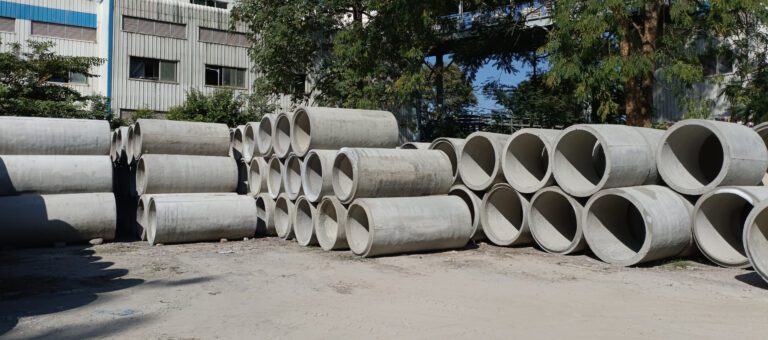
Reinforced Cement Concrete (RCC) pipes are widely used in sewerage, drainage, irrigation, and culvert systems. One of the most crucial aspects of their performance is the jointing system, which ensures leak-proof connections, structural integrity, and durability under varying load and soil conditions. The Bureau of Indian Standards (BIS) specifies jointing types and requirements for RCC pipes in IS 458:2021 – Precast Concrete Pipes (with and without Reinforcement).
In this article, we’ll explore the types of joints in RCC pipes as per IS 458:2021, their applications, and key features.
1. Spigot and Socket Joint (S&S Joint) For RCC Pipes
This is the most common type of joint used in non-pressure RCC pipes.
- Design: One end of the pipe is formed as a spigot (plain end) and the other as a socket (enlarged end).
- Sealing: A rubber ring, cement mortar, or bitumen-based material is used to fill the annular space between spigot and socket.
- Application:
- Sewerage pipelines
- Stormwater drains
- Gravity flow systems
- Advantages:
- Quick installation
- Flexible under minor ground settlement
- Economical
2. Collar Joint For RCC Pipes
The collar joint is another traditional and widely used system.
- Design: Both pipe ends are plain (spigot ends). A separate collar (precast concrete ring) is placed around the joint.
- Sealing: Cement mortar or bitumen mastic is filled in the annular gap between pipe ends and the collar.
- Application:
- Irrigation canals
- Low-cost sewer lines
- Advantages:
- Simple manufacturing
- Cost-effective for small diameters
- Easy to handle in rural applications
3. Flush Joint (Tongue & Groove Type) For RCC Pipes
A flush joint (also known as rebated joint or T&G joint) provides a smooth internal surface.
- Design: Pipes are manufactured with a tongue at one end and a corresponding groove at the other.
- Sealing: Mortar, mastic, or rubber rings are used for leak-proofing.
- Application:
- Culverts
- Road crossings
- Irrigation projects
- Advantages:
- Smooth bore – no projection inside the pipe
- Good hydraulic performance
- Strong structural connection
4. Automatic or Flexible Joint (Rubber Ring Joint) For RCC Pipes
This is the modern, high-performance jointing method recommended by IS 458:2021, especially for pressure and sewer lines.
- Design: The socket end has a groove for seating a rubber gasket. The spigot end is tapered and chamfered.
- Sealing: A factory-tested rubber gasket is compressed between spigot and socket, creating a watertight joint.
- Application:
- Pressure pipelines
- Sewerage systems requiring zero leakage
- Large diameter drainage pipelines
- Advantages:
- 100% leak-proof under pressure
- Allows axial deflection (ideal for settlement zones)
- Faster and cleaner installation compared to mortar joints
5. Special Joints (as per Project Requirement)
IS 458:2021 also allows for special jointing arrangements when specified in the project design:
- Examples:
- Mechanical joints with mild steel collars
- Epoxy-sealed joints for aggressive soil conditions
- Pressure-tight joints with double rubber rings
These are typically customized based on hydraulic and structural requirements.
Summary Table of RCC Pipe Joints (IS 458:2021)
| Joint Type | Sealing Material | Application | Key Advantage |
|---|---|---|---|
| Spigot & Socket (S&S) | Mortar / Rubber Ring | Sewer, Drainage | Flexible & economical |
| Collar Joint | Cement Mortar / Bitumen | Irrigation, Low-cost pipelines | Simple, rural-friendly |
| Flush Joint (T&G) | Mortar / Mastic / Rubber | Culverts, Irrigation | Smooth bore, hydraulic efficiency |
| Rubber Ring Joint | Rubber Gasket | Pressure & Sewerage Lines | Leak-proof, flexible |
| Special Joints | Steel/Epoxy/Rubber | Project-specific | Tailored solutions |
Conclusion
Choosing the right joint type in RCC pipes is essential for long-term performance, durability, and cost-effectiveness. IS 458:2021 provides clear guidance on manufacturing standards, permissible tolerances, and testing requirements for each joint system.
- For low-cost rural pipelines, collar joints remain a practical option.
- For urban drainage and sewerage, spigot & socket with rubber rings are now the preferred choice.
- For pressure pipelines and critical infrastructure, flexible rubber ring joints ensure maximum safety and performance.
In the North-Eastern states, NP2 Collar Joints are widely used for economical installations, while NP3 and NP4 Flush Joints are preferred for critical projects like highways and bridges. To meet these diverse requirements, Raj Concrete Products manufactures Spigot & Socket (S&S) joints in NP2, NP3, and NP4 classes from 100 mm to 600 mm, ensuring flexibility for engineers and contractors.
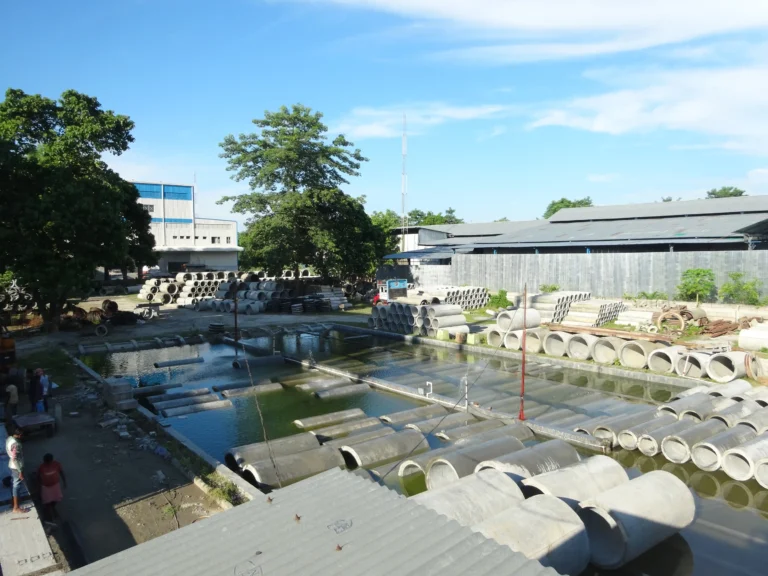
With our advanced batching plant, hydraulic testing facilities, and strong handling equipment, we deliver RCC spun pipes, precast box culverts, and boundary walls that meet the highest standards of strength, durability, and reliability. Our focus on quality, timely delivery, and customer satisfaction has made us a trusted partner for infrastructure development across Assam and the North-East.
👉 If you are a contractor, engineer, or government agency looking for reliable precast solutions, get in touch with Raj Concrete Products — your partner in building durable and future-ready infrastructure.